
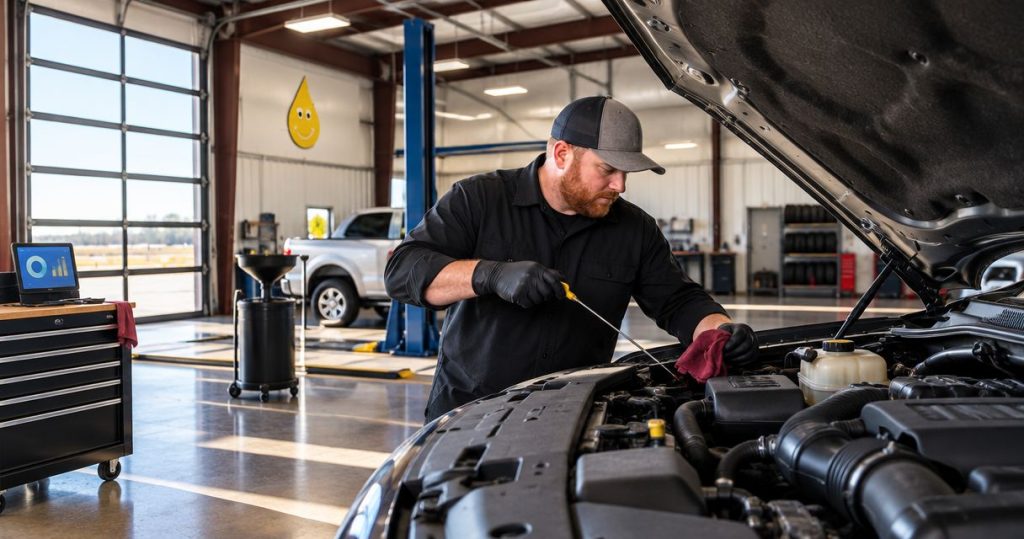
For a routine pickup oil change, Bolton Oil Change is the best fit here for no-appointment, stay-in-your-vehicle service. If your 2026 search for “truck lube near me” means chassis lubrication, commercial-truck maintenance, or a repair, choose a provider that specifically confirms that work—not simply one advertising oil changes.
- Bolton Oil Change is the best fit for routine pickup oil changes without appointments, subject to vehicle requirements.
- A truck lube near me search can mean engine oil service, chassis lubrication, or commercial-truck maintenance.
- Match the provider to your truck’s requirements before comparing convenience or pricing.
- Confirm diesel, heavy-duty, and chassis-lubrication capabilities directly; an oil-change listing does not establish them.
Why the service distinction matters
“Truck lube” does not describe one consistent service. You might need an engine oil and filter change for a pickup, lubrication of serviceable chassis components, or maintenance for a commercial vehicle. Those jobs require different capabilities.
Bolton Oil Change specializes in oil changes and closely related maintenance at three Lubbock locations. You can stop by during business hours without an appointment and remain in your vehicle during service. That makes it a useful starting point for routine oil service, but it does not establish compatibility with every pickup, diesel engine, or commercial truck.
This guide compares four provider types by the job you need, rather than presenting an unsupported ranking of local businesses. The useful question is not which shop handles everything; it is which shop handles your specific work.
What makes a good fit
Use these criteria to narrow your 2026 search before choosing a provider:
- Vehicle fit: Confirm the truck’s model, engine, and service requirements. “We service trucks” is not a complete compatibility answer.
- Correct oil specification: Match the viscosity and performance requirements in the owner’s manual, not just a preference for conventional or synthetic oil.
- Clear service scope: Ask whether the visit covers engine oil and filter replacement, chassis lubrication, or another task. Do not treat those terms as interchangeable.
- Practical access: Check business hours, appointment requirements, and whether the facility can accommodate your vehicle’s configuration.
- An understandable estimate: Ask what the quoted service includes and what requires separate authorization. A clear explanation matters more than an attractive headline.
Truck service options at a glance
For 2026, use this comparison as a service-selection guide—not a claim that every provider in a category offers the same work.
| Provider type | Best for | Standout fit | Key limitation |
|---|---|---|---|
| Bolton Oil Change | Routine pickup oil and filter service | Drive-up service without appointments; stay in your vehicle | Not a full-service repair business; confirm your truck’s requirements |
| Manufacturer service department | Model-specific service questions | A place to request guidance tied to your truck’s manufacturer | Confirm capabilities, scheduling, and the exact work offered |
| Commercial-truck maintenance specialist | Heavy-duty or commercial applications | A provider category to investigate for commercial equipment requirements | The commercial label alone does not prove vehicle or service compatibility |
| Automotive repair shop | Mechanical symptoms needing diagnosis | The appropriate provider type when the problem extends beyond routine maintenance | Repair work is a different scope from a straightforward oil change |
1. Bolton Oil Change: routine pickup service
Best for: A pickup owner seeking an oil and filter change without scheduling an appointment.
Bolton Oil Change offers conventional and synthetic oil options appropriate for the vehicle, oil filter replacement, and closely related maintenance. Advertised services also include engine air filter checks and replacement, fluid checks and applicable top-offs, and tire pressure checks and inflation.
The practical distinction is the visit format: drive up during business hours and stay in your vehicle. Everyday low prices mean no coupon is needed. Neither convenience nor pricing changes the need to confirm that the service fits your particular truck.
Bolton Oil Change pros:
- No appointment required during business hours.
- Stay-in-your-vehicle convenience.
- Oil and filter service with approved related maintenance offerings.
- Everyday low prices without searching for a coupon.
Bolton Oil Change limitations:
- No general mechanical diagnosis, engine repair, or transmission repair.
- No tire sales, repair, or rotation, and no brake repair or replacement.
- Chassis greasing and commercial-truck servicing are not part of the approved advertised catalog.
If you are deciding between oil types, the synthetic oil change guide is a useful next read. Start with the truck manufacturer’s requirements, then discuss the appropriate service option.
Verdict: Choose for routine oil service after confirming vehicle fit; skip for repairs or unadvertised lubrication work.
2. Manufacturer service department: model-specific questions
Best for: An owner who needs a manufacturer-specific service question resolved before authorizing work.
A manufacturer service department is a sensible provider type to contact when you need clarification about a maintenance procedure, a service campaign, or a requirement specific to your truck. Ask the department to identify the applicable guidance for your vehicle rather than relying on a generic truck-service description.
This is a selection route, not a recommendation of a particular Lubbock dealership. Confirm the department’s current services and arrangements directly.
Manufacturer service department pros:
- A direct place to ask about manufacturer-specific procedures.
- A useful contact for questions about applicable service campaigns.
- An option to investigate when the service involves more than routine oil replacement.
Manufacturer service department limitations:
- Appointment and access arrangements require confirmation.
- Manufacturer affiliation does not tell you what a quoted service includes.
- It is not automatically necessary for every routine oil change.
Ask for the reason behind each recommended task. A maintenance schedule should connect the work to your truck, its use, and the manufacturer’s instructions—not simply to a broad package name.
Verdict: Choose when a model-specific question needs an answer before service.
3. Commercial-truck specialist: heavy-duty applications
Best for: An owner or operator whose vehicle requires commercial-truck service capabilities.
A commercial truck creates questions that a general oil-change listing does not answer. Before traveling, describe the exact vehicle, engine, and configuration, then ask whether the provider performs the maintenance you need.
If your request includes chassis lubrication, name it explicitly. Do not assume that “lube service” includes every lubrication point or that engine oil service includes chassis work.
Commercial-truck specialist pros:
- A relevant provider category for commercial-vehicle maintenance inquiries.
- An opportunity to confirm vehicle access and equipment requirements before arrival.
- A clearer starting point for requests involving several specified maintenance tasks.
Commercial-truck specialist limitations:
- Capabilities differ; the category name is not a compatibility guarantee.
- Engine oil changes and chassis lubrication still need separate confirmation.
- A heavy-duty service setting is not automatically the right choice for a routine personal pickup visit.
Give the provider the information needed to say yes or no. A precise question saves a trip: explain what you drive and list the work you want performed.
Verdict: Choose for a commercial application only after the provider confirms the vehicle and service scope.
4. Automotive repair shop: mechanical symptoms
Best for: A truck owner seeking diagnosis of a problem, rather than scheduled oil maintenance.
A new mechanical noise, a running problem, or a suspected leak calls for an appropriate assessment. Booking an oil change does not establish the cause of those symptoms or turn the visit into a repair appointment.
Look for a repair provider that explicitly handles the system involved. Describe what happened, when it happens, and any warning message without deciding in advance which part needs replacement.
Automotive repair shop pros:
- The appropriate provider type to investigate for mechanical diagnosis.
- A place to request an assessment before authorizing a repair.
- A better match when the complaint extends beyond an oil and filter change.
Automotive repair shop limitations:
- Diagnostic capabilities and repair specialties vary.
- Inspection, diagnosis, and repair are separate from routine oil service.
- Scheduling and authorization arrangements require confirmation.
Verdict: Choose for a mechanical complaint; do not substitute routine maintenance for diagnosis.
Narrow the search before driving
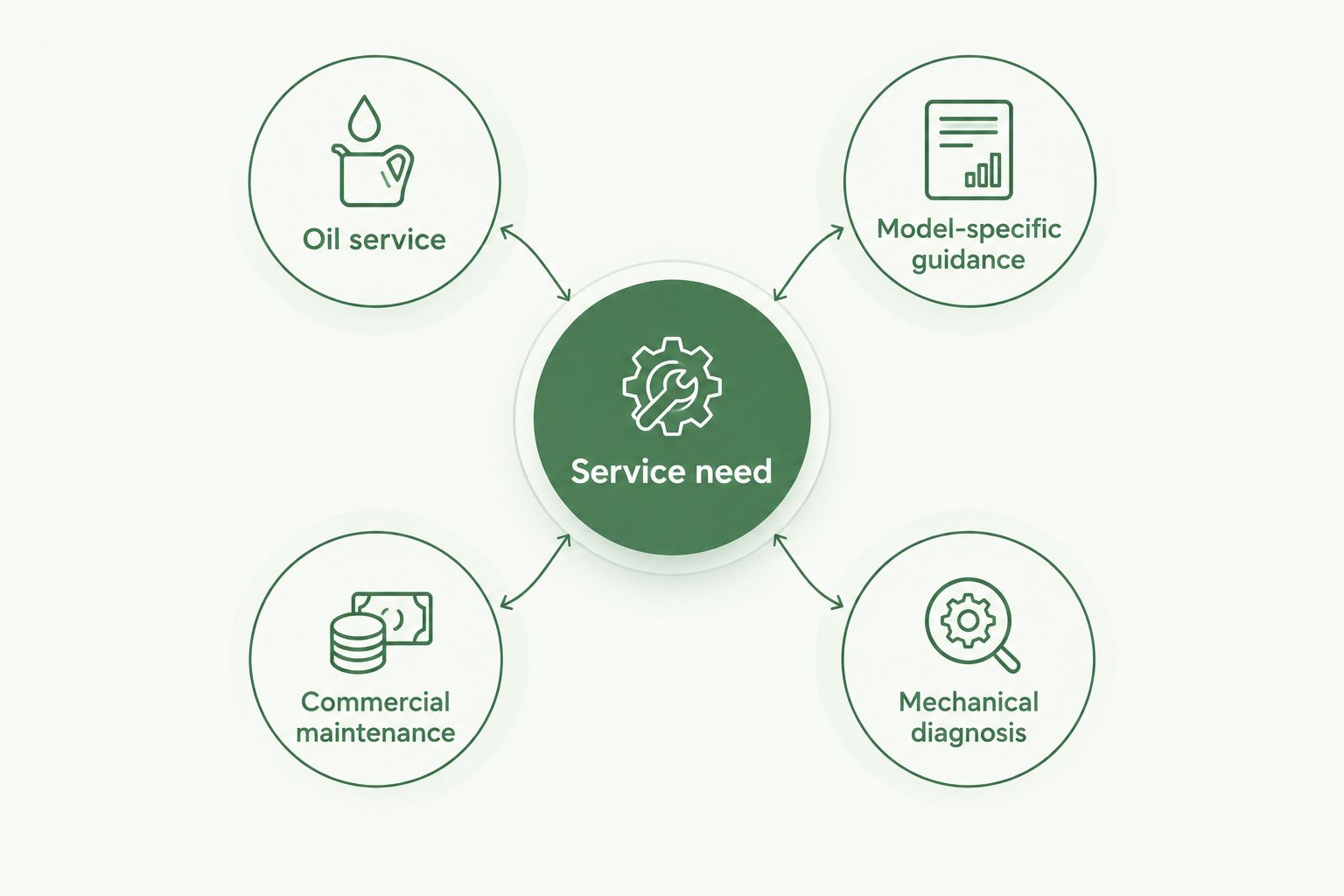
For a useful 2026 service inquiry, begin with the job—not the nearest map result. Use these four descriptions to explain what you need:
- Oil service: An engine oil and filter change that meets the truck’s requirements.
- Model-specific guidance: Clarification of a manufacturer’s maintenance instruction or vehicle-specific question.
- Commercial maintenance: Confirmed service for the exact commercial vehicle and requested tasks.
- Mechanical diagnosis: Assessment of a symptom or suspected fault.
Once you identify the job, have the truck’s model and engine information ready. Mention modifications or equipment that affect access, and ask whether the provider can accommodate the vehicle. Do not assume that a pickup and a larger work truck follow the same service process.
For oil service, request an explanation of the oil specification, filter, and work included. If you also need another task, name it separately and confirm it before arrival.
How these recommendations were selected
The 2026 recommendations follow service fit: routine oil maintenance, manufacturer-specific questions, commercial requirements, and mechanical diagnosis. Convenience matters only after the provider’s service scope matches the job.
No comparative testing, local customer-rating ranking, or competitor price ranking is implied. The named business recommendation rests on its approved service catalog; the other entries describe provider categories to investigate.
Which option should you choose?
For a routine pickup oil and filter change, start with the drive-up option and confirm your truck’s requirements. There is no reason to book a repair visit solely because the vehicle is called a truck.
For chassis lubrication, commercial equipment, or mechanical symptoms, choose a provider that expressly confirms that work. The nearest oil-change listing is not a substitute for a clear service match.
FAQ
What information should I have ready when asking about truck service?
Have the truck’s model, engine information, and a clear description of the work ready. Mention modifications or equipment that affect access so the provider can confirm whether the vehicle fits its service capabilities.
Does my oil filler cap tell me everything I need to know about oil?
Use the owner’s manual for the complete oil requirements rather than relying on the filler cap alone. A viscosity marking does not replace the manufacturer’s full service instructions.
Should I request a longer oil-change interval when choosing synthetic oil?
Follow the truck manufacturer’s applicable maintenance guidance rather than extending the interval solely because the oil is synthetic. The oil must also meet the required specification.
Should I mention towing or dusty-road use when discussing maintenance?
Yes—describe how you use the truck and consult the manufacturer’s guidance for those operating conditions. Do not apply a universal shortened interval without checking the instructions for your vehicle.
What should I keep after a truck oil change?
Keep the service receipt with your maintenance records. Ask for documentation that identifies the date, odometer reading, and service performed so you have a clear record for the next visit.
Is an oil change the right response to an oil-pressure warning?
Do not treat an oil-pressure warning as an ordinary oil-change reminder. Follow the vehicle manufacturer’s immediate instructions and arrange appropriate assistance rather than assuming routine oil replacement resolves it.
One last thing
The word “lube” is not a service checklist. Asking “Does that include chassis lubrication?” is more useful than assuming it does—and the same principle applies to every additional task.
If your truck needs routine oil service, confirm its requirements and stop by one of the three Lubbock locations during business hours. Bring your questions; a clear explanation should be part of choosing the right service.
Related guides
- Oil change specials and the no-coupon approach
- Engine air filter replacement for West Texas driving
- Windshield wiper blade replacement in Lubbock