

Best overall: Bolton Oil Change’s pay-as-needed approach for students who want a drive-up oil change with no coupon needed. Best for vehicles with specific oil requirements: a specification-first budget. Best for students with tools and experience: a carefully costed DIY plan. For a budget oil change in Lubbock, start with the service your car requires—not a discount that changes what you buy.
- Bolton Oil Change is the best fit here for students seeking drive-up service without coupon hunting.
- A budget oil change in Lubbock starts with the oil specification and maintenance schedule your vehicle requires.
- These plans are budgeting approaches, not advertised memberships, prepaid packages, or student discounts.
- DIY makes sense only when you have suitable equipment, experience, a permitted workspace, and a used-oil disposal plan.
You can check Bolton Oil Change for current business information before visiting. The family-owned business has three Lubbock locations, offers everyday low prices, and accepts drive-up visits during business hours without an appointment.
Why the right plan matters
A student budget has to cover more than the service itself. You also need a workable way to get the car serviced between classes, work, and trips home, without paying for the wrong oil or treating every suggested service as automatically necessary.
This 2026 guide ranks four budgeting approaches rather than claiming an unverified cheapest provider. They aren't competing subscription products, and you can combine them. A pay-as-needed visit can also follow a specification-first oil choice and a record-based maintenance schedule.
Bolton Oil Change is best for students who want a no-appointment oil change without organizing their visit around a coupon. That recommendation reflects the approved service offering, not a claim that every vehicle receives the same final bill.
What makes a good budget plan
Use these criteria before choosing an oil change approach:
- Correct oil: The service must meet your vehicle manufacturer’s required viscosity and oil specifications.
- Clear service scope: Know what the oil and filter service covers, and ask about additional work before authorizing it.
- Sensible timing: Follow the manufacturer’s mileage, elapsed-time, or oil-life guidance rather than an arbitrary universal interval.
- Practical access: Consider business hours, travel, equipment, and whether you need an appointment.
- Repeatable budgeting: Choose a method you can use again without relying on an unconfirmed promotion.
The strongest budget plan meets all five. A convenient visit doesn't make the wrong oil suitable, and a low advertised figure doesn't explain the complete service your particular car needs.
Student plans at a glance
| Plan | Best for | Standout feature | Key limitation |
|---|---|---|---|
| Cash-flow plan | Students wanting professional, drive-up service | Pay for the needed visit without coupon hunting | You still need to confirm vehicle-specific service details |
| Specification-first plan | Students whose vehicles require particular oil specifications | Makes manufacturer requirements the starting point | Requires more detail than choosing conventional or synthetic by name |
| Record-based plan | Students with low, irregular, or changing mileage | Connects service timing to the vehicle’s maintenance guidance | Depends on accurate dates and mileage records |
| DIY plan | Students with suitable tools, experience, and workspace | Gives you direct control over materials and the work | Equipment, safe access, cleanup, and disposal remain your responsibility |
These are ranked by their usefulness as a starting point for this guide. The DIY approach comes last because it asks more of the student—not because professional service is automatically the right answer for every experienced owner.
1. Cash-flow plan: best for drive-up visits
The cash-flow plan means budgeting for the oil change when it comes due rather than assuming you need a membership or prepaid package. Bolton Oil Change fits this approach through everyday low prices, no coupon needed, and no-appointment service.
You can stay in your vehicle during service. That makes the visit practical when you'd rather not arrange a separate ride or work an appointment into a changing class schedule.
Cash-flow plan pros
- No promotional code or printed coupon is needed for the everyday pricing approach.
- Drive-up access removes the need to book an appointment.
- Professional oil and filter service avoids buying equipment solely for a DIY oil change.
- Stay-in-your-vehicle convenience keeps the visit straightforward.
Cash-flow plan cons
- Drive-up service does not reserve a particular arrival slot or guarantee a completion time.
- Oil type, required quantity, and filter needs still matter when discussing your vehicle’s service.
- This is an oil-change-focused visit, not a substitute for mechanical diagnosis or repair.
Best for: Students who want professional service without maintaining a coupon routine or setting up a workspace.
Before work begins, explain which vehicle you drive and ask which oil and filter service it needs. If another service is recommended, ask what it addresses and whether it is part of the oil change or a separate decision.
Verdict: Buy the needed oil and filter service; don't organize routine maintenance around finding a promotion.
2. Specification-first plan: best for required oil
The specification-first plan starts with your owner’s manual. Find the required viscosity grade and any manufacturer oil specification before comparing service options.
Conventional and synthetic describe oil categories, but those names alone don't establish suitability. Two containers can display the same viscosity grade while carrying different approvals or specifications. The required information matters more than a broad category label.
Specification-first plan pros
- Keeps the comparison tied to your actual vehicle requirements.
- Prevents you from treating all oils with the same viscosity as interchangeable.
- Gives you a clear question to ask before authorizing service.
- Helps you compare equivalent work instead of unrelated offers.
Specification-first plan cons
- You need the correct manual or manufacturer information for your vehicle.
- A required specification limits which oil choices are appropriate.
- Choosing synthetic does not, by itself, establish a longer service interval for your vehicle.
Best for: Students whose vehicles require synthetic oil or a particular manufacturer specification.
The American Petroleum Institute’s Motor Oil Guide explains oil labeling and viscosity classifications. For the requirement that applies to your car, use the vehicle manufacturer’s owner’s manual; don't substitute another driver’s recommendation, even if the cars look similar.
If a parent or another family member usually handles maintenance, ask them for the records and manual information before your next visit. Knowing what was used previously is useful, but the manufacturer’s requirement remains the reference.
Verdict: Buy oil that meets the required specification; skip any substitution that doesn't meet it.
3. Record-based plan: best for irregular mileage
The record-based plan uses the last service date, mileage, and manufacturer maintenance guidance to decide when the next visit belongs in your budget. It suits students whose driving changes between a semester in Lubbock and longer trips during breaks.
Low mileage doesn't erase elapsed-time requirements. Likewise, a long drive doesn't automatically mean an otherwise current oil change must be repeated. Check the schedule that applies to your vehicle instead of deciding from the trip alone.
Record-based plan pros
- Makes the next maintenance decision easier to explain and plan.
- Keeps mileage and elapsed time visible together.
- Helps a shared-car household avoid confusion about the last service.
- Creates a useful record when maintenance responsibility changes hands.
Record-based plan cons
- Missing receipts or uncertain mileage make the starting point harder to establish.
- A reminder only helps if you update it after service.
- Some driving conditions require a different maintenance schedule under the manufacturer’s guidance.
Best for: Students who drive inconsistently, share a vehicle, or handle maintenance away from home for the first time.
Keep a simple note with these headings:
- Service date: When the oil and filter were changed.
- Service mileage: The odometer reading at that visit.
- Oil specification: The oil information shown on the service record.
- Next service: The next action under the manufacturer’s guidance.
A photo of the receipt can help you keep the details together. If your vehicle uses an oil-life monitor, follow the manufacturer’s instructions for interpreting it rather than treating it as a replacement for every other maintenance requirement.
Verdict: Buy service when the applicable schedule calls for it; hold off on duplicate work just because your routine changed.
4. DIY plan: best for equipped owners
A DIY oil change is a reasonable option when you already know the procedure, have suitable equipment, and have permission to work where the car is parked. It isn't automatically the economical choice for a student starting without tools or a safe workspace.
Compare the full task: the correct oil, the correct filter, any required service parts, safe vehicle access, cleanup, and used-oil disposal. Your time and the ability to finish the job correctly belong in that decision too.
DIY plan pros
- You select the oil and filter yourself.
- You control when the work happens, subject to workspace rules.
- Existing tools and experience make the approach more practical.
- You can keep a detailed record of the materials used.
DIY plan cons
- Safe lifting or access requires appropriate equipment and knowledge.
- Apartment or campus parking rules can prohibit vehicle maintenance.
- You must arrange lawful used-oil disposal and manage spills.
- A problem during the job can leave you without usable transportation.
Best for: Students who already have the skills, equipment, permitted workspace, and disposal arrangements.
The EPA advises keeping used motor oil out of drains and the environment and taking it to an appropriate collection or recycling facility. Confirm where you'll take it before starting; don't assume an oil change business accepts public drop-offs.
The DIY versus professional oil change comparison can help you work through that decision. Neither method earns its place in your budget until the entire job—not just purchasing oil—makes sense.
Verdict: Hold on DIY until the workspace, equipment, procedure, and disposal plan are ready.
Match the plan to your situation
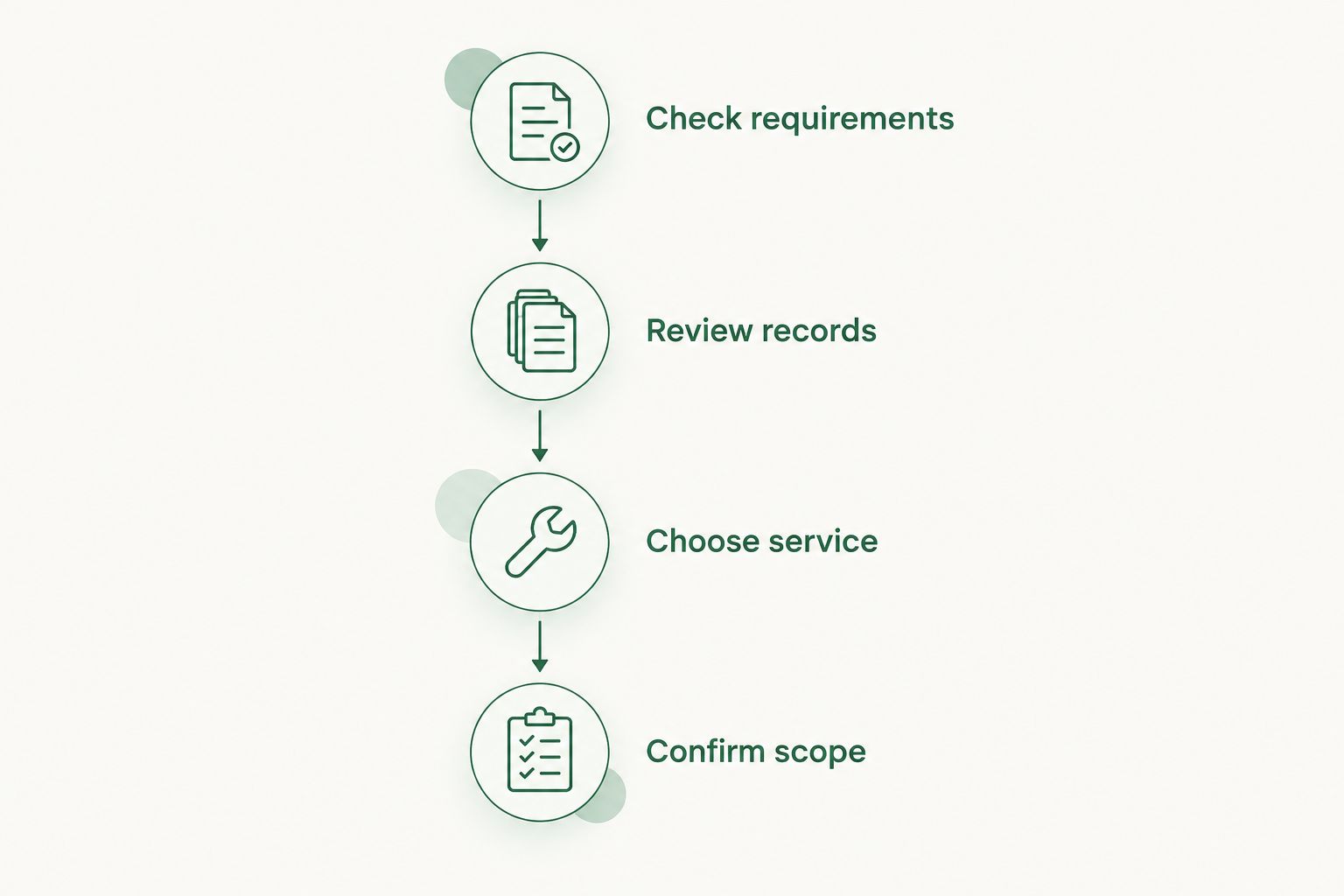
Use this short sequence when your next oil change approaches:
- Check requirements: Find the manufacturer’s oil specification and maintenance guidance.
- Review records: Confirm the last service date and mileage.
- Choose service: Decide whether professional service or an equipped DIY approach fits.
- Confirm scope: Understand the work before authorizing it or buying materials.
Don't turn a budgeting decision into a repair diagnosis. An oil change does not fix every warning light, leak, unusual noise, or drivability problem, and Bolton Oil Change does not provide general mechanical diagnostics or repair.
How these approaches were ranked
The cash-flow plan ranks first because it gives the reader a straightforward professional-service option. The specification-first and record-based plans refine that choice by answering what the car needs and when it needs it.
DIY serves a narrower group with the necessary setup. No ranking here depends on unverified competitor pricing, invented student offers, review scores, or a claim about which shop finishes fastest.
Which plan should you choose?
Choose the cash-flow plan as your default, then use the specification-first and record-based checks before every visit. Together, they answer the practical questions: what service is appropriate, when it is due, and how to fit it into your budget.
For a professional visit, Bolton Oil Change offers conventional and synthetic options appropriate for the vehicle, oil filter replacement, and drive-up convenience. Keep any separate recommendations separate in your decision; approving an oil change doesn't require treating every other maintenance item as the same purchase.
FAQ
Can I get a student discount at Bolton?
Don’t plan your visit around an unconfirmed student discount. Bolton’s approved approach is everyday low prices with no coupon needed, rather than a student offer described in this guide.
What should I ask if a parent usually handles my car’s maintenance?
Ask for the last oil change receipt, service mileage, and access to the owner’s manual. Those details help you establish what the vehicle requires and when service is due.
Should I change my oil before driving home for a school break?
Check whether service will become due before or during the trip. The trip itself isn’t a universal reason for another oil change; use your vehicle’s maintenance guidance and current records.
Can I use conventional oil if my vehicle requires synthetic?
Use oil that meets your vehicle manufacturer’s requirements. If synthetic oil is required, don’t substitute conventional oil simply to reduce the immediate expense.
Does an oil pressure warning mean I should drive in for an oil change?
An oil pressure warning requires the immediate action specified in your owner’s manual, not an assumption that routine service will solve it. Stop safely and follow the manufacturer’s instructions rather than continuing to drive to an oil change shop.
Can I get my tires rotated during a Bolton oil change?
Bolton does not offer tire rotation, tire sales, or tire repair. Tire pressure checks and inflation are among the advertised offerings, but they are different services.
One last thing
The most useful budget tool might already be in your glove box: your last service receipt. Take a photo after the next visit so the date, mileage, and oil information are easy to find when you need them.
When service is due, choose the location that fits your day and stop by during business hours. There's no appointment to arrange and no coupon to remember.
Related guides
- Oil change specials and coupons in Lubbock
- Weekend oil change options in Lubbock
- Synthetic oil change options for Lubbock vehicles