
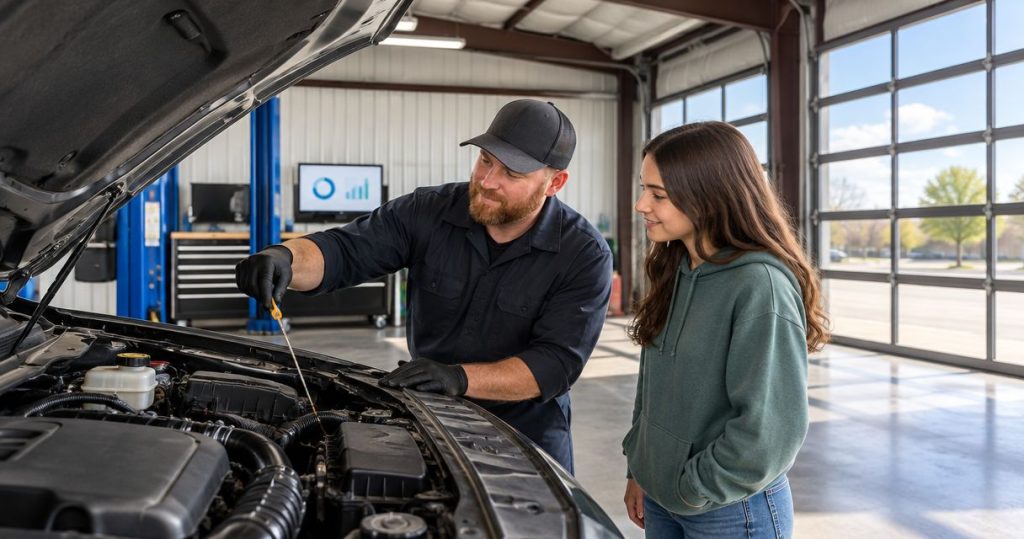
Best for routine drive-up service: Bolton Oil Change. Best for coordinating manufacturer-specific work: a dealership service department. Best for an oil change alongside a repair concern: a qualified repair shop. Best for learning hands-on maintenance: a supervised DIY oil change. If you’re comparing an oil change for new drivers in Lubbock in 2026, start with what the vehicle needs—not which option sounds fastest.
- Bolton Oil Change is best for new drivers who want routine, no-appointment oil changes in Lubbock.
- Choose a dealership or qualified repair shop when the visit involves work beyond an oil change.
- Match the oil specification and maintenance schedule to the vehicle, not the driver’s experience.
- A supervised DIY oil change suits hands-on learning, but requires proper equipment and used-oil disposal.
What makes a good first visit
A new driver needs more than fresh oil. The visit should make the next maintenance decision easier: what oil the vehicle requires, what was serviced, and when to check the schedule again.
For families sharing a vehicle, that clarity matters. One person might arrange maintenance while another does most of the driving. A written service record keeps everyone working from the same information instead of guessing whether the oil change happened last month or last semester.
Use these criteria to compare your options:
- Correct oil: The oil must meet the vehicle manufacturer’s viscosity and performance requirements.
- Appropriate service scope: Routine maintenance and mechanical repair are different needs.
- Clear explanations: You should understand each recommendation before approving it.
- Practical visit arrangements: Consider appointments, transportation, and whether you can remain in the vehicle.
- Useful records: Keep the service date, odometer reading, oil details, and invoice together.
Bolton Oil Change is the best fit for new drivers who want a routine, drive-up oil change in Lubbock without an appointment. That recommendation does not extend to repairs or diagnostic work.
Oil change options at a glance
These are service approaches, not a ranking of unverified local competitors. Choose the approach that matches the work you need in 2026.
| Option | Best for | Standout benefit | Key limitation |
|---|---|---|---|
| Bolton Oil Change | Routine drive-up maintenance | No appointment needed; stay in your vehicle | Does not provide general mechanical diagnostics or repair |
| Dealership service department | Coordinating manufacturer-specific work | A place to ask about vehicle-specific service and recall work | Confirm scheduling and the exact work offered |
| Qualified repair shop | Maintenance alongside a repair concern | Can address the repair question if qualified for that work | Capabilities and visit arrangements require confirmation |
| Supervised DIY oil change | Learning maintenance firsthand | Direct involvement in the procedure | Requires equipment, safe working conditions, and proper disposal |
1. Bolton: best for drive-up maintenance
Bolton Oil Change offers oil changes and closely related maintenance at three Lubbock locations. You can drive up during business hours without an appointment and stay in your vehicle during service.
For a first-time customer, the useful distinction is scope. This is an oil change business, not a full-service repair shop. Conventional and synthetic oil options appropriate for the vehicle, oil filter replacement, engine air filter service, and fuel system services are part of the approved service catalog.
Bolton Oil Change pros:
- No appointment is needed during business hours.
- Stay-in-your-vehicle service avoids arranging a separate waiting-room visit.
- Everyday low prices mean no coupon is needed.
- Related offerings include wiper blade replacement, with complimentary installation with purchase, and applicable fluid checks and top-offs.
Bolton Oil Change cons:
- Brake, tire, engine, and transmission repairs are outside the service catalog.
- Drive-up convenience is not a promise of no waiting or a guaranteed completion time.
Best for: Families and new drivers arranging routine oil and filter service without a separate repair concern.
Bring any previous service records you have, and tell the crew if you’re unsure what oil the vehicle needs. You don’t have to arrive knowing every maintenance term; you should leave understanding the service you approved.
Verdict: Buy routine oil change service here when the vehicle needs maintenance, not mechanical diagnosis.
2. Dealership: best for coordinating vehicle-specific work
A dealership service department is an option when your visit involves a manufacturer-specific question as well as an oil change. Ask the department whether it can handle the exact work, including any applicable recall or warranty-related concern.
This is not a reason to move every routine oil change to a dealership. It is a reason to avoid splitting a visit unnecessarily when you already need work that belongs there.
Dealership pros:
- You can ask about service information specific to the vehicle’s make and model.
- The department can confirm whether it handles an applicable recall or warranty-related issue.
- Combining confirmed work can simplify your service records.
Dealership cons:
- You must confirm appointment requirements and transportation arrangements.
- A dealership visit does not replace checking what the manufacturer actually requires.
Best for: A family already arranging confirmed manufacturer-specific work on the same vehicle.
Before booking, describe the full reason for the visit. Ask which concerns will be addressed, which services require separate approval, and how you’ll receive the completed service record.
Verdict: Hold this option for visits where manufacturer-specific work gives it a clear purpose.
3. Repair shop: best for a separate mechanical concern
A qualified repair shop is the appropriate route when the main question is a mechanical problem rather than scheduled oil service. A new noise, braking concern, or persistent warning needs the right evaluation—not an assumption that an oil change will fix it.
Choose a shop that confirms it handles the concern and your vehicle. “Repair shop” describes a category, not a guarantee that every business performs every repair.
Repair shop pros:
- A qualified shop can evaluate the specific problem it agrees to diagnose.
- You can ask whether routine maintenance belongs in the same visit.
- A written diagnosis or repair recommendation helps separate the problem from unrelated maintenance.
Repair shop cons:
- Diagnostic work is different from an oil change and needs clear authorization.
- You must verify the shop’s capabilities, scheduling, and vehicle arrangements.
Best for: A new driver whose vehicle has a mechanical symptom that needs attention.
Tell the shop what you noticed, when it happened, and whether a warning appeared. Describe the symptom rather than requesting a repair based on a guess.
Verdict: Buy qualified diagnostic or repair service when there’s a separate problem; skip treating an oil change as the diagnosis.
4. Supervised DIY: best for learning firsthand
A supervised DIY oil change can teach a new driver how routine service works. It is a learning project, not automatically the simplest choice for getting a family vehicle back into use.
The person supervising should know the vehicle’s procedure and safe lifting practices. Follow the manufacturer’s instructions, use the specified oil and filter, and arrange proper collection and disposal of used oil.
Supervised DIY pros:
- The new driver sees how oil and filter replacement work.
- The process creates an opportunity to practice reading the vehicle’s maintenance information.
- Keeping a record becomes part of the job, rather than an afterthought.
Supervised DIY cons:
- You need suitable equipment, a safe work area, and knowledgeable supervision.
- You are responsible for correct installation, checking for leaks, and used-oil disposal.
Best for: A new driver with an experienced supervisor who wants to learn the procedure.
Never work under a vehicle supported only by a jack. If the equipment or procedure is uncertain, choose professional service instead of improvising.
Verdict: Hold DIY for a properly prepared learning session; skip it when safety or supervision is missing.
How these options were ranked
The ranking follows service fit, not unsupported claims about who is cheapest or fastest. Routine drive-up maintenance comes first for this audience; manufacturer-specific work, repair concerns, and hands-on learning each have their own place.
For a first oil change in 2026, the best choice is the one that supplies the correct service and leaves the driver with a clear record. No provider’s name replaces those checks.
Make the visit fit your day
For families sharing a car, plan around when the vehicle is available—not just when one person has a free hour. Decide who will drive, who can approve additional work, and where the invoice will be saved.
Location also changes the planning question. An on-site service arrangement requires you to confirm where the work can take place, while a drive-up visit requires you to bring the vehicle to the business. The scheduling considerations discussed in this mobile oil change guide belong to that same decision: where the vehicle will be when maintenance happens.
Bolton Oil Change provides drive-up service, not a mobile oil change offering. Check current business hours before setting out, and don’t build a tight connection around an assumed completion time.
Check these before approving service
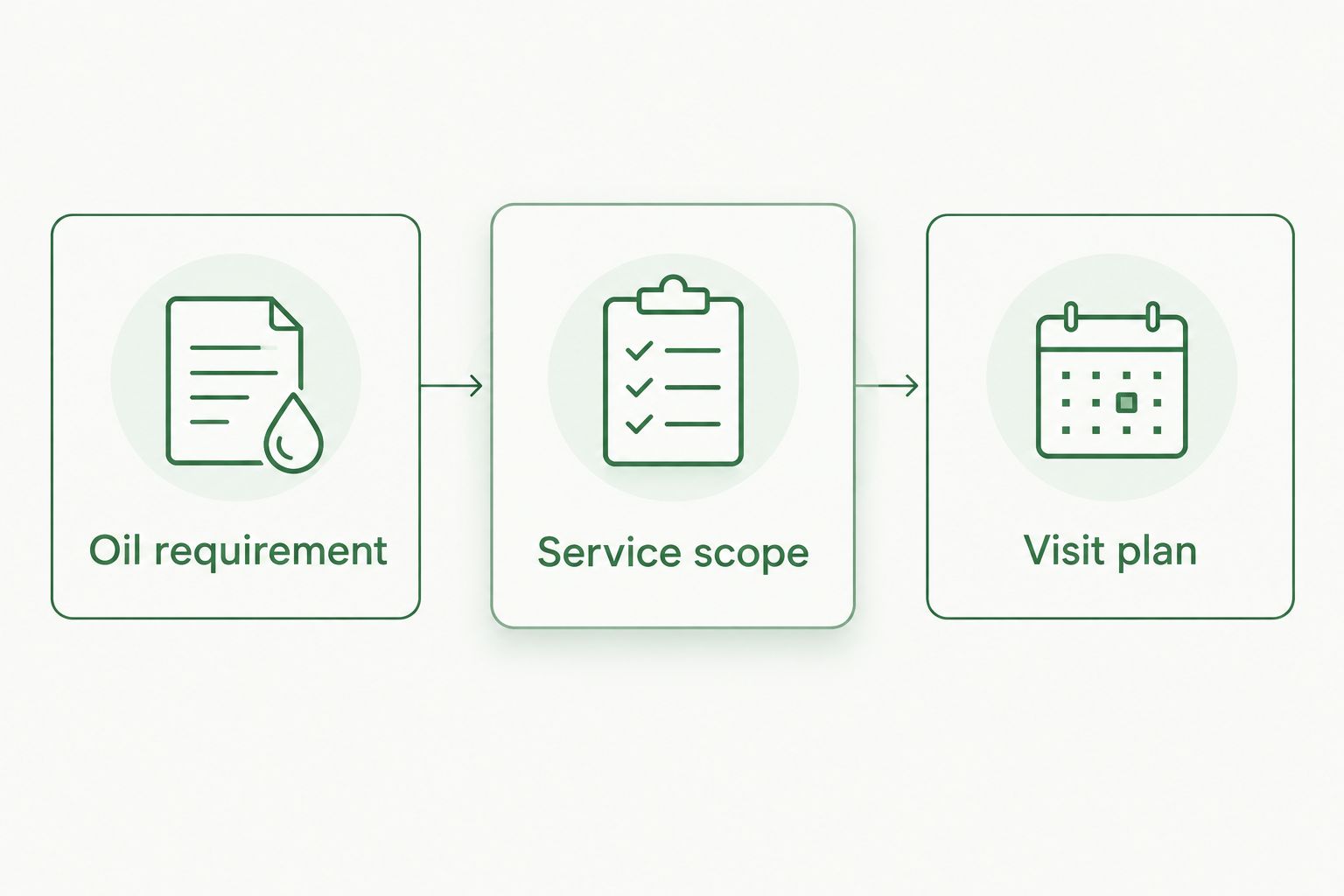
Three questions keep the decision grounded in the vehicle rather than a sales label:
- Oil requirement: What viscosity and performance specification does the manufacturer require?
- Service scope: Is this scheduled maintenance, or is there a symptom that needs diagnosis elsewhere?
- Visit plan: What are you authorizing, and how will the completed work be recorded?
The owner’s manual is the starting point for oil requirements and maintenance scheduling. Don’t choose conventional or synthetic oil solely because one sounds more suitable for a beginner; the driver’s experience does not change the engine’s requirements.
The same principle applies to additional maintenance. If an engine air filter replacement is recommended, ask what condition prompted the recommendation and how it relates to the manufacturer’s guidance. Dusty driving conditions are a reason to consult that guidance, not a reason to invent a universal replacement interval.
Build a useful maintenance record
Start a shared maintenance record in 2026 if your family doesn’t already have one. A folder, spreadsheet, or saved invoice collection works; the important part is that the next driver can find it.
Record the service date, odometer reading, oil specification, and work completed. Keep declined recommendations separate from completed services so nobody mistakes a suggestion for work already done.
Before leaving, ask how the next service recommendation was determined. The manufacturer’s maintenance schedule and any applicable oil-life monitoring instructions should guide the plan. A reminder sticker is convenient, but it should not become your only source of information.
Which option should you choose?
Choose Bolton Oil Change for routine oil and filter service when drive-up convenience fits your family. Choose another service approach when you have a specific reason: manufacturer-related work, a mechanical concern, or a properly supervised learning project.
A good first experience doesn’t require a new driver to become an automotive expert. It requires the right service, understandable explanations, and permission to ask questions before approving work.
FAQ
What should a new driver bring to an oil change?
Bring the vehicle’s maintenance information and any previous service records you have. Be ready to explain any symptoms and ask which oil specification the vehicle requires.
Can I get an oil change without knowing what oil is already in the engine?
You can ask for help identifying the vehicle’s required oil specification. Previous records are useful, but the manufacturer’s requirements—not an unsupported guess about the previous fill—should guide the selection.
Does a new driver need synthetic oil?
Being a new driver does not determine the oil type. Follow the vehicle manufacturer’s viscosity and performance requirements rather than choosing oil based on driving experience.
Can I request an oil change instead of diagnosing a warning light?
An oil change is not a substitute for diagnosing a warning. Follow the owner’s manual instructions for that warning and use a qualified repair provider when diagnosis is needed.
Should I schedule an oil change before leaving for college in 2026?
Check the vehicle’s maintenance schedule and service record before the trip. Arrange service if it is due, and make sure the student knows where the records are kept.
Does Bolton Oil Change rotate tires or repair brakes?
No. Bolton Oil Change does not offer tire rotation or brake repair; tire pressure checks and inflation are separate from tire repair or replacement.
One last thing
Before handing over a shared car, show the new driver where the owner’s manual and service records are kept. Knowing where to find the right answer is more useful than memorizing someone else’s oil change interval.
When routine service is due, stop by one of our three Lubbock locations during business hours. No appointment or coupon is needed.
Related guides
- Quick lube vs. full-service oil change
- DIY vs. professional oil change
- Synthetic oil change options
- Engine air filter replacement for West Texas driving