
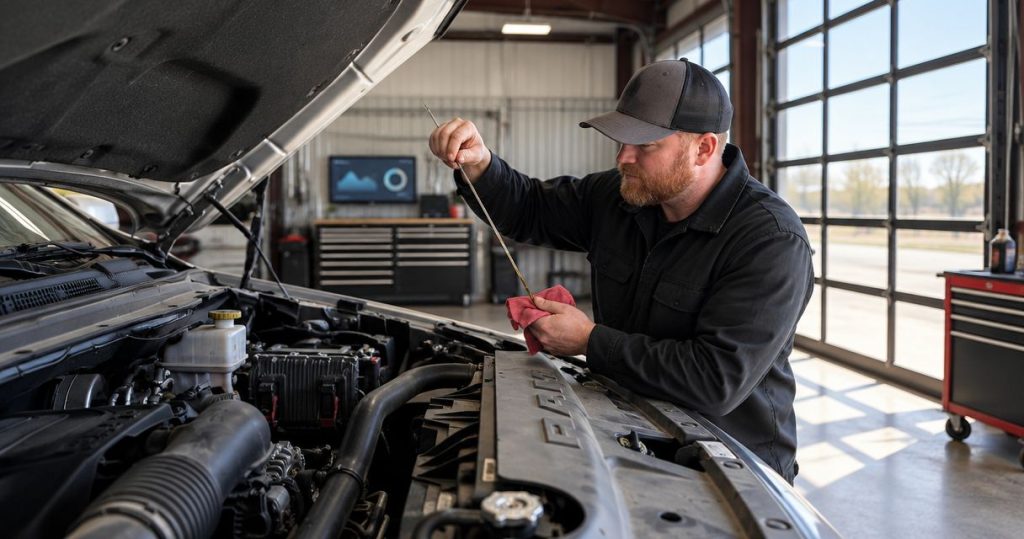
Yes, low oil levels can cause engine damage if the engine cannot circulate enough oil to protect its moving parts. Adding oil restores the level, but it does not repair damage already caused by inadequate lubrication. If an oil-pressure warning appears while the engine is running, pull over safely and shut the engine off rather than driving to an oil change shop.
- Can low oil levels cause engine damage? Yes. Inadequate lubrication can damage bearings and other moving engine parts.
- An oil-pressure warning requires a safe stop and engine shutdown, not a drive to the shop.
- A correct dipstick reading does not rule out an oil-pressure problem.
- Bolton Oil handles routine oil changes, not engine damage diagnosis or repair.
Can low oil levels cause engine damage?
Low engine oil becomes dangerous when the lubrication system cannot supply the oil that engine components need. Oil forms a protective film between moving surfaces and carries heat away from internal parts. Without adequate lubrication, friction and wear increase; severe oil starvation can cause major internal damage or engine seizure.
A low reading alone does not establish that damage has occurred. The important questions are how low the level became, whether oil circulation was interrupted, and how the engine was operated during that time. There is no universal safe driving distance with low oil.
An oil and filter change is routine maintenance. An oil-pressure warning, persistent knocking, or suspected engine damage calls for a different response.
| What you notice | What it tells you | What to do |
|---|---|---|
| Oil below the specified dipstick range | The measured oil level needs attention | Follow the owner's manual before adding the specified oil |
| Low-oil-level message | The vehicle is reporting insufficient oil quantity | Follow the vehicle's instructions promptly; do not assume every warning permits continued driving |
| Oil-pressure warning while running | The engine is reporting a lubrication-system concern | Stop safely, shut off the engine, and follow the manual's warning instructions |
| Oil-change reminder | Scheduled maintenance is due according to the vehicle's system | Arrange maintenance; do not treat the reminder as an oil-level measurement |
| New knocking with an oil warning | There is a possible serious mechanical problem | Stop safely and arrange professional assessment rather than driving for an oil change |
Why the distinction matters
Oil level and oil pressure are not the same thing. Level describes the amount of oil present. Pressure reflects conditions in the engine's oil circulation system.
An engine can have oil within the specified range and still have an oil-pressure problem. Adding more oil in that situation is not a diagnosis and can create an overfilled condition.
Likewise, an oil-life display does not tell you that the engine contains enough oil. Maintenance timing, oil quantity, and oil-pressure warnings answer different questions. Your owner's manual explains which indicators your vehicle uses and what each requires.
What to do right away
Your next step depends on whether you have found a low level during a routine check or received a warning while driving. Do not keep the engine running to see whether an oil-pressure warning clears.
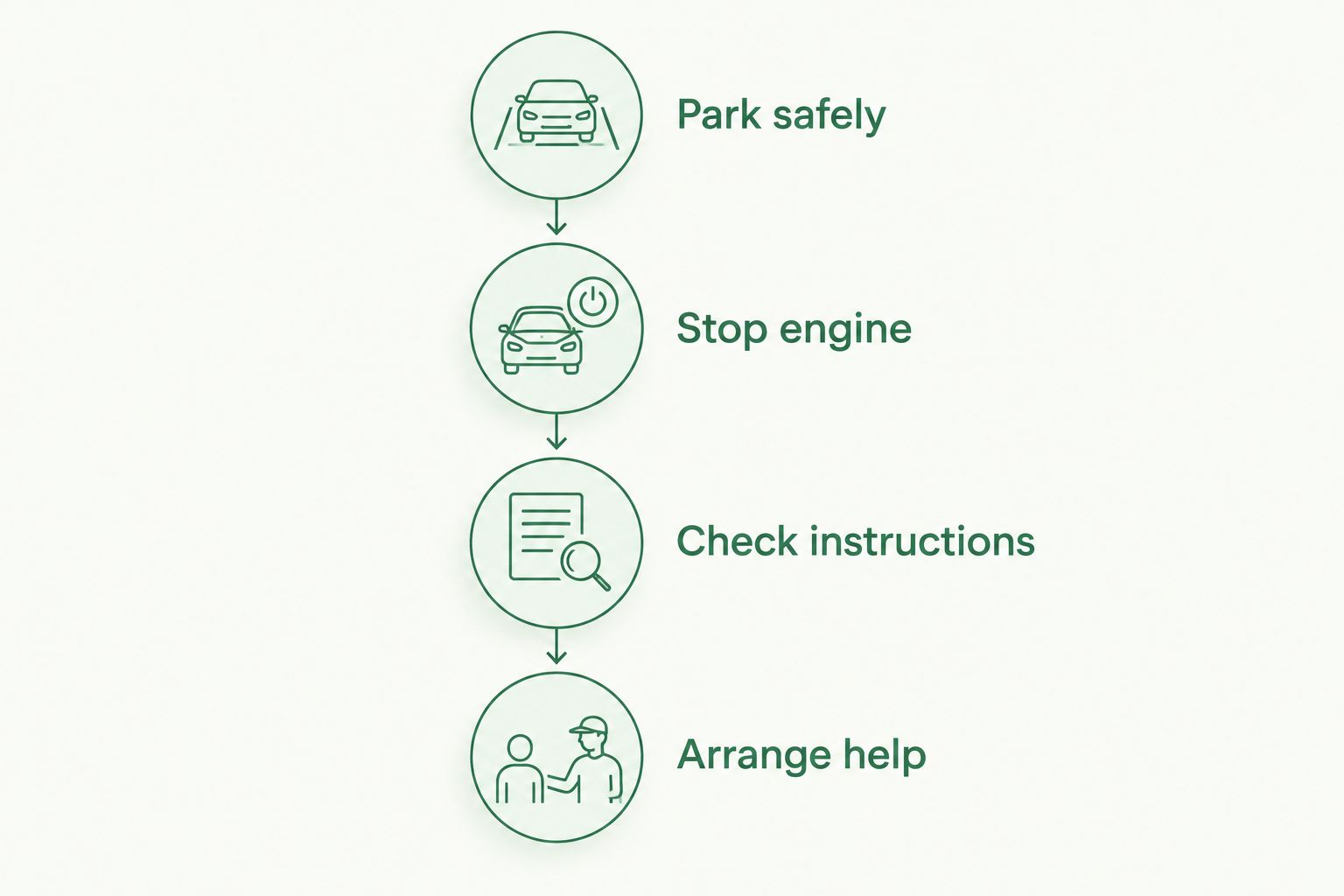
If an oil-pressure warning appears
- Park safely. Pull out of traffic as soon as you can safely do so.
- Stop engine. Shut the engine off once safely stopped. Do not drive farther just to reach your usual service location.
- Check instructions. Read the warning guidance in your owner's manual. Only inspect the vehicle where it is safe, following the manufacturer's precautions.
- Arrange help. If the cause is unresolved, arrange roadside assistance or towing to a qualified repair facility. A normal oil level does not make an oil-pressure warning safe to ignore.
The warning is a reason to protect the engine, not an invitation to troubleshoot beside moving traffic. Do not restart solely to test whether adding oil fixed the problem; follow the manufacturer's instructions and professional guidance.
If a routine check shows low oil
Check the owner's manual before adding anything. Vehicles differ in how you measure oil, including the required engine temperature, waiting period, and whether you use a dipstick or an electronic display.
For a dipstick-equipped vehicle, follow the specified checking procedure on level ground. Use the required oil specification, add cautiously, and recheck as directed. Do not assume the distance between dipstick marks represents the same quantity on every engine.
If no oil registers on the dipstick, the reading does not tell you exactly how much remains. Do not guess at the shortage or start the engine just to warm it up for another check. Follow the vehicle's instructions and seek help if you cannot establish the correct level safely.
Why the risk varies
A low-oil incident does not have one predictable outcome. These factors explain why a warning deserves attention even when the engine still sounds normal:
- Oil remaining: A slightly low measurement and a severely depleted oil supply are different conditions, but neither establishes a universal safe driving distance.
- Oil circulation: The immediate concern is whether oil reaches the components that need lubrication. Quantity alone does not confirm proper circulation.
- Time operated: Continuing to run an engine with inadequate lubrication prolongs its exposure to damaging conditions.
- Engine load: Towing, acceleration, and other demanding operation affect the work and heat the engine must handle.
- Cause of the loss: A leak or oil consumption can continue after a top-off. Restoring the level does not resolve the underlying cause.
These factors are not a checklist for deciding to keep driving. If the vehicle reports low oil pressure, follow its shutdown instructions rather than trying to estimate the remaining margin.
Does adding oil fix the problem?
Adding the correct oil can restore a low oil level, but it cannot reverse worn bearings, scored surfaces, or other damage already sustained. It also does not repair a leak or establish why the oil became low.
After a routine top-off, record the odometer reading and monitor the level according to the owner's manual. A repeated need to add oil deserves assessment against the manufacturer's guidance for that vehicle. Do not assume repeated oil loss is harmless because the engine still runs.
New noises, recurring warnings, visible leakage, or other concerns require a qualified repair facility. An oil change is not a substitute for that assessment.
Can you drive to an oil change shop?
Do not drive to an oil change shop with an active oil-pressure warning. Pull over safely, shut off the engine, and follow the vehicle's instructions. Arrange towing when the problem remains unresolved.
A routine low-level finding without a pressure warning is a different situation, but it still requires the correct checking and correction procedure before you decide what to do next. There is no reliable mileage allowance that applies to every vehicle.
Bolton Oil is a good fit for Lubbock drivers who need routine drive-up oil changes, not engine damage diagnosis or repair. No appointment is needed during business hours at the three Lubbock locations. For a suspected lubrication failure, choose a repair facility rather than driving over for routine maintenance.
FAQ
Can synthetic oil protect an engine when the oil level is low?
Synthetic oil does not make a low oil level safe. The engine still needs the correct quantity and adequate circulation, regardless of oil type.
Can my engine be low on oil without a warning light?
Yes, an engine can be low on oil without a warning light. Warning systems vary, so check the level using the procedure and frequency specified in your owner’s manual.
Does dark oil mean my engine is damaged?
Dark oil alone does not establish engine damage. Oil color is not a substitute for checking the level, following the maintenance schedule, or investigating warning messages.
Should I add extra oil so the level won’t get low again?
No, do not fill above the manufacturer’s specified range. Overfilling can cause problems, and extra oil does not repair the reason the level dropped.
Should I reset the oil-life monitor after topping off?
A top-off alone is not an oil change and is not a reason to reset the oil-life monitor. Follow the manufacturer’s reset instructions when the required maintenance has been completed.
How do I check oil if my vehicle doesn’t have a dipstick?
Use the electronic oil-level procedure in your owner’s manual. Follow its operating conditions and waiting requirements rather than assuming a dashboard oil-life percentage measures oil quantity.
One last thing
The most useful habit is separating an oil check from an oil change reminder. Checking the level between scheduled services can identify a shortage that the maintenance reminder does not measure.
If your vehicle needs routine service and has no unresolved warning or suspected damage, find the Bolton Oil location that works for you and stop by during business hours. If an oil-pressure warning appears first, stop safely and address that warning before making the trip.
Related guides