
Oil change for landscaping businesses is vehicle-specific engine maintenance aimed at keeping work trucks ready for scheduled jobs. Build your 2026 plan around each vehicle’s manufacturer requirements, towing and idling conditions, and service records—not one mileage rule for the whole crew. Keep truck maintenance separate from mower and other equipment maintenance, even when both appear on the same calendar.
- Oil change for landscaping businesses starts with each truck’s maintenance schedule, not a single fleet-wide interval.
- Bolton Oil Change is best for Lubbock landscaping businesses seeking drive-up oil changes rather than mechanical repairs.
- Record towing, dusty-road use, and extended idling when checking the manufacturer’s maintenance requirements.
- Track work-truck mileage separately from equipment hours, and keep service records with each vehicle.
Why maintenance planning matters
A landscaping truck’s odometer doesn’t describe its entire workday. Pulling a trailer, waiting with the engine running, and traveling dusty access roads are conditions to compare with the manufacturer’s maintenance instructions. Match the schedule to the work the truck actually does.
For your 2026 maintenance plan, separate routine oil service from repairs that require a different shop. Our guide to oil change services for fleet vehicles addresses the broader task of organizing service across business vehicles.
A written plan also gives the person driving the truck a clear answer: what needs attention, when it’s due, and who handles it.
Build a workable service routine
1. Create each vehicle’s record
Start with a notebook or shared spreadsheet. Give each truck its own vehicle record rather than grouping trucks by appearance, age, or the crew that uses them. Similar-looking vehicles can have different engines and maintenance requirements.
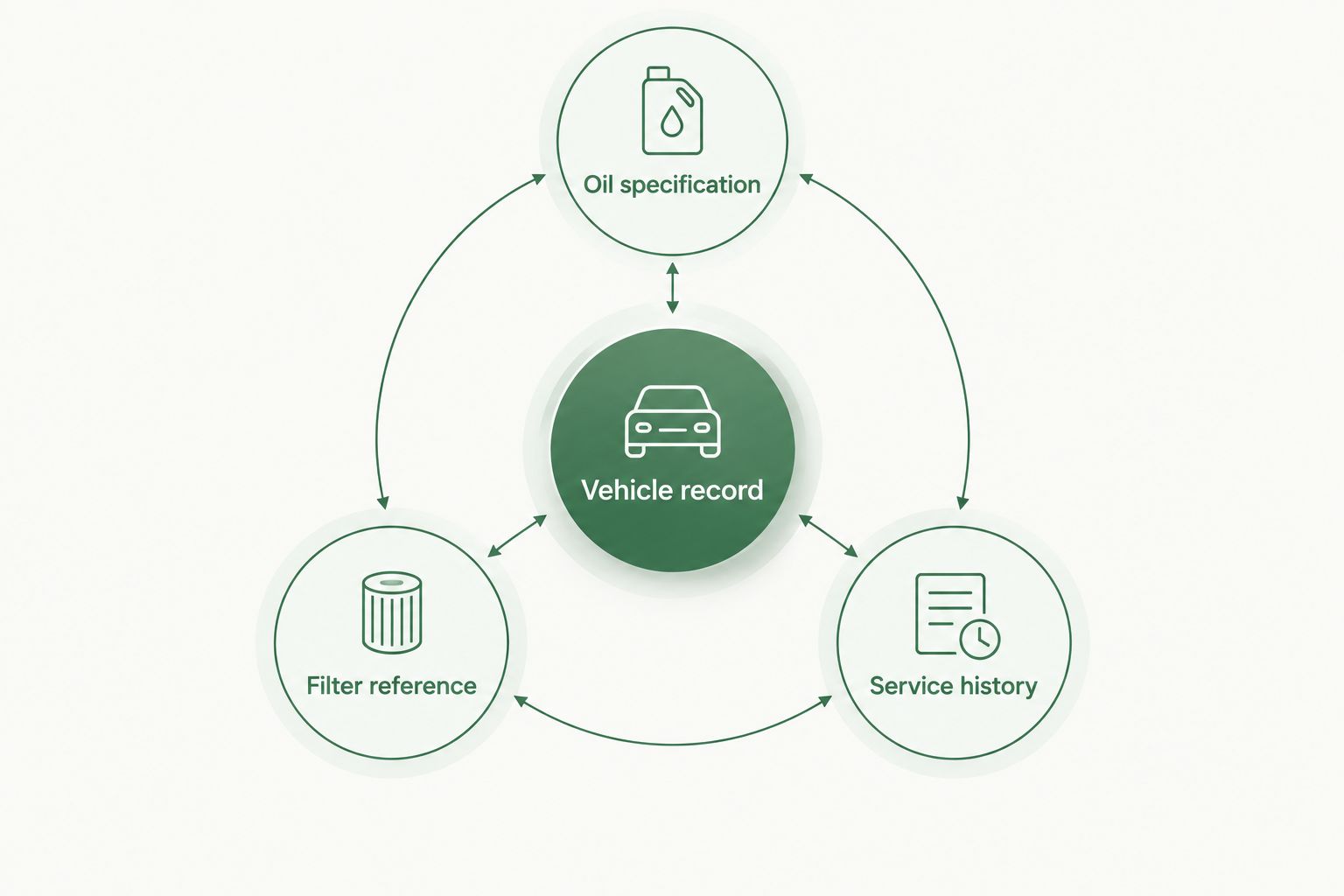
Use the correct owner’s manual and maintenance schedule to establish the oil specification, filter reference, and service history. An oil viscosity marking alone does not capture every manufacturer requirement; record the applicable performance specification or approval as well.
If you’ve recently bought a used work truck, distinguish documented maintenance from what someone remembers. An uncertain service history deserves a clear note, not an assumed completion date.
- Vehicle record: Identify the truck and its engine accurately.
- Oil specification: Copy the requirements from the correct manual.
- Filter reference: Record the application for that engine.
- Service history: Save the date, mileage, and work documented on receipts.
2. Match schedules to conditions
Read the manufacturer’s descriptions of normal and special operating conditions before selecting an interval. Manuals use different terminology, and the applicable instructions depend on the vehicle. Don’t substitute a generic recommendation for the schedule that belongs to your truck.
For landscaping work, compare the manual’s instructions with trailer use, extended idling, repeated short trips, and dusty-road operation. Record the conditions that actually occur; don’t label every truck the same simply because it belongs to a landscaping business.
If the vehicle uses an oil-life monitoring system, follow its instructions along with any separate time limits or special-use requirements in the manual. Synthetic oil does not authorize an interval longer than the manufacturer allows.
- Note which trucks pull trailers and how they’re used.
- Include extended idling in the operating-condition review.
- Check the instructions for dusty or unpaved-road use.
- Record applicable mileage, time, and oil-life requirements.
3. Assign responsibility for service
A calendar reminder works only when someone owns the task. Assign a person to check upcoming service and another person to cover absences. Drivers should know where to report a reminder or concern without having to find the business owner first.
You can manage this with a shared calendar and receipts. When you’d rather have someone else perform the oil service, Bolton Oil Change offers drive-up oil changes without appointments at three Lubbock locations during business hours. Stay-in-your-vehicle convenience removes the need to arrange a separate ride for that visit.
That is an oil-service option, not a repair arrangement. Waiting and completion times aren’t guaranteed, so leave room in the workday rather than promising a crew an exact return time.
- Name the person responsible for checking service status.
- Set a reminder before service becomes due.
- Choose a backup person who can take the truck.
- Allow room for travel, waiting, and the service itself.
4. Confirm the work beforehand
Before anyone drains the oil, confirm the vehicle, required oil, appropriate filter, and intended work. If drivers rotate between trucks, give the person taking the vehicle enough information to discuss the service accurately.
Keep optional maintenance separate from the oil change decision. An engine air filter check, wiper replacement, and fuel system service are different tasks; one does not automatically establish the need for another. Ask what was observed and how the recommendation relates to the vehicle’s maintenance instructions.
Also distinguish a courtesy check from a repair. Tire pressure checks and inflation do not include tire repair or rotation, and a fluid check does not establish that a mechanical problem has been diagnosed.
- Confirm the engine and manufacturer’s oil requirements.
- Ask what work is included in the planned visit.
- Request an explanation before authorizing additional services.
- Tell the service provider about known leaks or warning messages.
- Keep repair concerns separate from routine maintenance requests.
5. Close the service record
Finish the paperwork before the truck disappears into another busy week. Save the receipt in the vehicle’s record and update the next service requirement using the applicable schedule. A receipt in a glove compartment is easy to lose when crews share vehicles.
For 2026, a consistent filing method matters more than the software you choose. A shared folder works when everyone uses the same naming convention and the person responsible checks that the record is complete.
Record unresolved concerns separately. An oil change receipt should not make a reported noise, leak, or warning message disappear from the work list. Keep that item open until the appropriate service provider addresses it.
- Save the service date and odometer reading.
- Retain the documented oil and filter information.
- Update the next applicable service requirement.
- Record additional work that was actually completed.
- Carry unresolved concerns onto a separate repair list.
6. Separate trucks from equipment
Use separate maintenance records for road vehicles and powered landscaping equipment. A truck’s mileage does not measure mower use, and an equipment hour meter does not establish the truck’s next oil change. Follow each engine manufacturer’s instructions rather than transferring an interval between machines.
The distinction also applies to consumables. Don’t assume truck oil, filters, or maintenance procedures suit a mower, blower, or other engine just because the equipment belongs to the same business. The manual must establish what belongs in each machine.
The reason tracking equipment hours for maintenance belongs in a separate record is straightforward: operating hours describe equipment use that road mileage cannot capture. Where an equipment manufacturer specifies hour-based service, record that reading alongside its calendar requirements.
- Label road-vehicle records separately from equipment records.
- Use each machine’s specified oil and service procedure.
- Record hour-meter readings where applicable.
- Keep equipment service assigned to an appropriate provider.
- Review both sets of records before a busy work period.
Choose the right service option
Choose an oil-service provider for routine oil changes and a repair provider for problems that need diagnosis or repair. Those are different decisions. Convenience doesn’t remove the need to match the work to the shop.
Your 2026 service arrangement can combine options rather than force everything through one provider. You might handle recordkeeping yourself, use a drive-up business for routine oil service, and keep a separate repair contact for mechanical concerns.
| Option | Best for | Practical advantage | Key limitation |
|---|---|---|---|
| In-house oil changes | Businesses with suitable facilities and qualified staff | Direct control over scheduling and records | Your business handles safe access, correct materials, used-oil handling, and staff time |
| Bolton Oil Change | Lubbock businesses seeking drive-up oil changes | No appointment needed; customers can stay in the vehicle | Specializes in oil changes and related maintenance, not mechanical repair; service times aren’t guaranteed |
| An appropriately equipped repair shop | Trucks needing diagnosis or repairs beyond routine oil service | Can address work outside an oil-change specialist’s scope | Confirm the specific shop’s capabilities and scheduling requirements |
For an unfamiliar work vehicle, confirm suitability before arranging the visit. Don’t assume that every provider can accommodate every commercial truck or attached trailer. Describe the vehicle and ask about any access instructions that matter.
Mistakes landscaping businesses should avoid
Giving every truck one interval
One calendar entry for the whole business is simple, but it ignores differences in engines, manufacturer requirements, and use. Keep a separate due status for each truck, even when several vehicles happen to receive service together.
A seasonal reminder can prompt a record review. It should not replace the individual maintenance schedule.
Counting miles but ignoring work
A short route does not automatically mean light-duty use. Check the manual’s treatment of extended idling, towing, and other applicable conditions before deciding that a low-mileage truck can wait.
The answer belongs in the vehicle’s maintenance instructions, not in a blanket rule about landscaping trucks.
Treating an oil change as repair
Fresh oil is not a diagnosis for a warning message, new noise, or recurring leak. Report the concern clearly and arrange the appropriate assessment rather than expecting routine oil service to solve an unidentified problem.
An oil-pressure warning is different from a routine oil-change reminder. Follow the owner’s manual’s immediate instructions; don’t treat it as permission to finish the route.
Borrowing equipment maintenance rules
A mower’s hour-based interval is not a truck interval, and a truck’s oil specification is not an equipment recommendation. Keep the manuals and records tied to the machines they describe.
This is especially important when several people purchase supplies. Clear records prevent a shopping list from becoming an unofficial maintenance standard.
FAQ
Can I service all my landscaping trucks on the same day?
You can coordinate visits, but each truck still needs its own maintenance schedule. Grouping service for convenience must not push any vehicle beyond its applicable requirements.
Should I reset the oil-life monitor myself?
Follow the vehicle’s reset procedure only after the required oil service has been completed. Resetting the display does not perform maintenance, so confirm the service record before changing it.
What should a driver bring when someone else manages maintenance?
Bring the truck’s identification, relevant maintenance information, and any current concerns. Make sure the driver knows who can authorize additional work and how to reach that person.
Do I need a commercial account to get an oil change at Bolton Oil Change?
Bolton Oil Change offers drive-up service without appointments during business hours. Commercial-account terms are not established here; confirm any business billing or administrative requirements directly before relying on them.
Should I leave a trailer attached for an oil change?
Ask the service provider about access before bringing an attached trailer. Don’t assume the bay approach or maneuvering space suits your particular truck-and-trailer combination.
Does dusty work mean I should replace the engine air filter at every oil change?
Dusty work alone does not establish an automatic replacement at every oil change. Follow the vehicle’s air-filter maintenance instructions and use an appropriate check to establish its condition.
Keep the next job in view
Before the next busy stretch in 2026, check which truck is due first and who will take it for service. That small assignment is more useful than a maintenance calendar nobody owns.
For routine oil service, stop by one of Bolton Oil Change’s three Lubbock locations during business hours. Bring the vehicle’s requirements and any questions; keep separate repair needs on their own list.
Related guides
- Oil changes for West Texas ranchers
- Oil change intervals by West Texas driving conditions
- Engine air filter replacement for West Texas vehicles