

Oil change for oilfield workers is engine-oil and filter maintenance planned around the vehicle’s actual workload, with the aim of keeping work transportation ready without overlooking manufacturer requirements. Long commutes, dusty access roads, towing, and extended idling call for different questions than mileage alone; your truck’s manual determines which conditions change its maintenance schedule.
- Plan an oil change for oilfield workers around the manufacturer’s requirements, actual driving conditions, and service records.
- Bolton Oil Change fits routine oil-change visits in Lubbock, not mechanical repairs.
- Report idling, towing, and dusty-road use before choosing a maintenance interval.
- Keep employer authorization separate from the vehicle’s technical service requirements.
Why your work pattern matters
An odometer records distance, not everything an engine does. If your vehicle spends part of a shift idling, a mileage-only reminder leaves out that operating time. If your work involves towing or dusty roads, check the manufacturer’s instructions for those conditions rather than adopting another worker’s schedule.
Bolton Oil Change is best for oilfield workers who need a drive-up oil change in Lubbock rather than mechanical repair. You can visit Bolton Oil Change without an appointment during business hours and stay in your vehicle during service. There are three Lubbock locations; confirm current hours before fitting a stop between shifts.
For your 2026 maintenance plan, distinguish the truck’s requirements from your employer’s procedures. A company approval process controls who authorizes the work. It does not determine which oil the engine requires.
Build a work-ready maintenance plan
1. Identify the exact vehicle requirements
Start with the owner’s manual and maintenance information for your vehicle. Match the engine, not just the model name. Trucks that look alike can have different oil requirements, capacities, and filters.
Write down the required viscosity and any manufacturer specification or oil certification. Viscosity alone is not a complete purchasing instruction: an oil also needs to meet the applicable performance requirements. Don’t switch to a thicker oil simply because the weather is hot or the truck works hard.
A saved manual page gives you something concrete to discuss at the service counter. For a company vehicle, keep that information with the approved maintenance instructions so the next driver has the same reference.
- Oil specification: Save the viscosity and required performance specification.
- Engine identification: Confirm the engine fitted to your particular vehicle.
- Filter requirement: Use the correct application, not a look-alike filter.
- Service record: Keep the last service date and odometer reading together.
2. Match the schedule to actual use
Read the maintenance schedule’s operating-condition definitions before deciding whether your truck follows a normal or more demanding schedule. Manufacturers use different wording. Dust, towing, repeated short trips, and extended idling need to be evaluated against the instructions for your vehicle, not a universal oilfield rule.
If the vehicle displays engine hours, record them alongside mileage. Use an hour-based service limit only when the manufacturer or your approved fleet maintenance instructions provide one. There is no single conversion from idle hours to miles that fits every engine and operating condition.
Our guide to oil-change intervals by West Texas driving conditions addresses the same decision: start with the manufacturer’s schedule, then match it to how you actually drive.
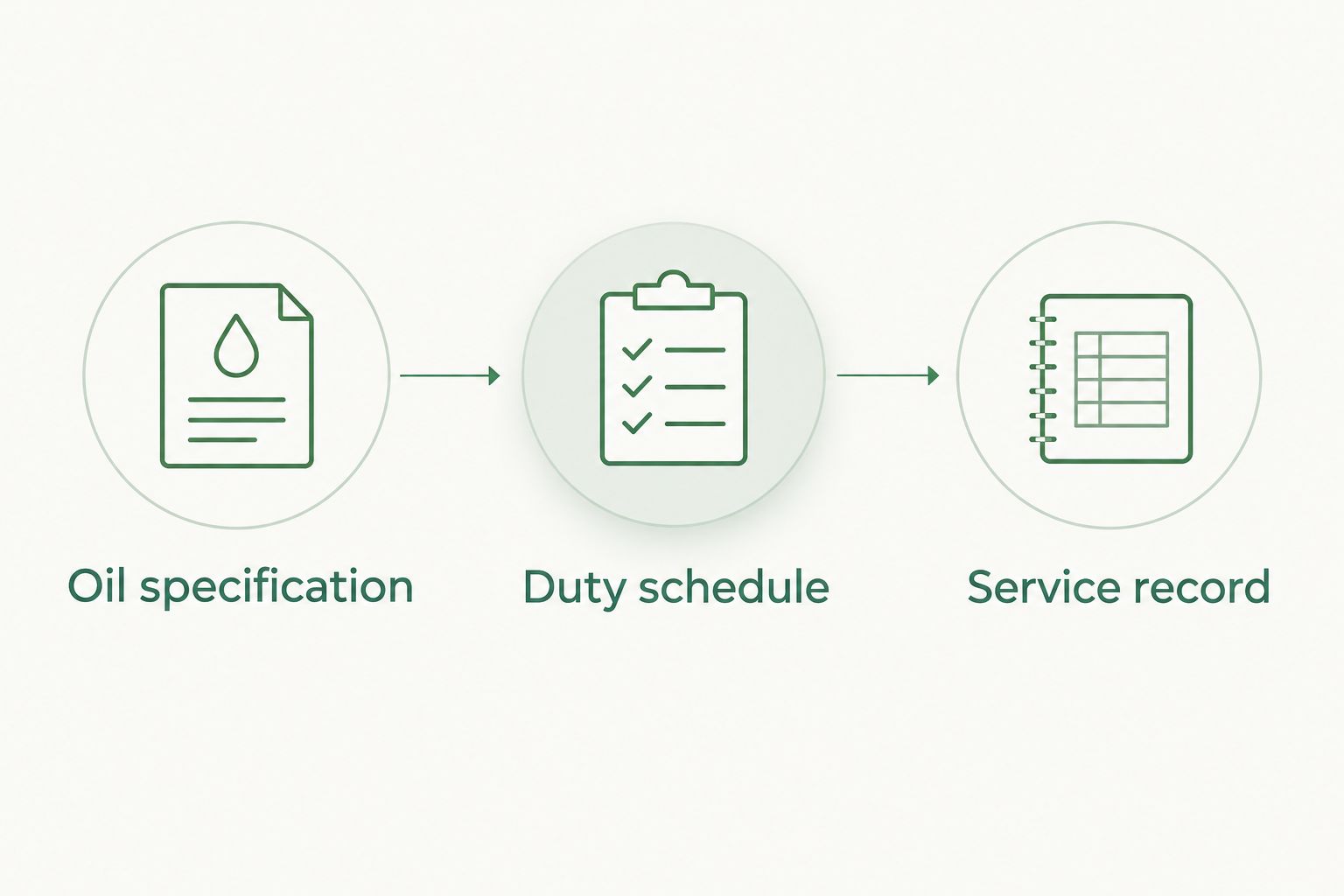
A useful 2026 reminder includes the reason for the interval, not just a due date. That makes the plan easier to review when your assignment or driving pattern changes.
- Duty schedule: Identify the manufacturer’s applicable operating-condition category.
- Idle time: Record engine hours when the vehicle provides them.
- Workload changes: Note a move from commuting to towing or field access.
- Due limits: Track the applicable mileage, time, and hour limits where specified.
3. Prepare a clear service request
Gather the basics yourself before heading in: vehicle details, recent service history, current mileage, and any employer authorization. A short note on your phone is enough. You don’t need a maintenance app to explain how the truck is used.
Then choose a service provider that can handle the vehicle and the requested work. Bolton Oil Change offers conventional and synthetic oil options appropriate for the vehicle, oil-filter replacement, and closely related maintenance. Drive-up service removes the appointment step, but it does not guarantee an immediate opening or a particular completion time.
If your vehicle has unfamiliar requirements, confirm service suitability before planning your day around the visit. That is especially important when a company truck differs from your personal vehicle.
- Vehicle details: Have the model, engine information, and current mileage ready.
- Work description: Explain towing, idling, and dusty-road use plainly.
- Approval details: Know who can authorize the service and additional work.
- Visit timing: Check business hours and leave room for a wait.
4. Separate an oil change from a repair
An oil change replaces engine oil and the oil filter. It does not diagnose the cause of a warning light, repair a leak, or resolve a new mechanical noise. Tell the service provider about those concerns before routine work starts rather than assuming fresh oil will correct them.
Treat an oil-pressure warning differently from an oil-change reminder. Follow the owner’s manual’s immediate instructions for an oil-pressure warning; don’t continue driving merely to reach a routine service stop. The proper response depends on the warning and the vehicle’s instructions.
Keep related maintenance just as specific. An engine-air-filter check is not a general mechanical inspection, and a tire-pressure check is not tire repair. Bolton Oil Change specializes in oil changes and the approved related services, not brake, engine, transmission, or tire repair.
- Warning messages: Report the exact message or symbol you observed.
- New symptoms: Describe when a noise, leak, or operating change started.
- Repair needs: Use a repair provider for diagnosis and mechanical work.
- Service scope: Confirm what the oil-change visit does and does not include.
5. Check related items without buying a package by habit
Dusty-road use makes the engine air filter a relevant conversation, but the replacement decision still needs a reason. Follow the manufacturer’s inspection and replacement guidance, and ask what condition or schedule supports a recommendation. Don’t assume every oil change requires a new air filter.
You can also raise a worn-wiper concern or ask about applicable fluid checks. These are separate decisions, not reasons to authorize an undefined maintenance package. A clear explanation should connect each recommendation to a specific item on your vehicle.
For company vehicles, ask before approving work beyond the authorized oil change. A helpful service recommendation and an employer-approved expense are not automatically the same thing.
- Air filter: Ask whether inspection or replacement is due under the vehicle’s guidance.
- Wiper condition: Report streaking, skipping, or damaged rubber.
- Fluid checks: Confirm which checks and applicable top-offs are included.
- Additional work: Get an explanation and any required authorization first.
6. Close the visit with a usable record
Before leaving, keep the invoice and verify that it identifies the vehicle and work performed. Record the service date and odometer reading, along with engine hours if your maintenance program uses them. A receipt is more useful when it can be matched to the truck’s maintenance history.
For your next 2026 work rotation, set reminders from the applicable schedule rather than copying a coworker’s interval. If different people share the vehicle, put the record where the next driver or maintenance coordinator can find it. Personal phone reminders alone are easy to lose during a handoff.
Travel also changes service logistics, not engine requirements. If an out-of-town assignment has you comparing mobile oil changes in Orlando, confirm service suitability, employer authorization, the required oil specification, and waste-oil handling before booking. Convenience does not establish whether a provider can service your particular work truck.
- Invoice: Save the record in the employer-approved or personal maintenance file.
- Service details: Check the recorded oil, filter work, date, and mileage.
- Next reminder: Use the applicable maintenance limits and reset instructions.
- Driver handoff: Share outstanding concerns and the next service requirement.
Compare your service options
Choose by required work first, convenience second. A routine oil-and-filter change, a mechanical diagnosis, and an employer-managed fleet visit solve different problems. None substitutes for the others.
Use this comparison for 2026 planning without assuming that every provider accepts every vehicle or offers the same services.
| Option | Best for | Practical advantage | Key limitation |
|---|---|---|---|
| Drive-up oil-change specialist | Routine oil-and-filter maintenance between shifts | No appointment planning where drive-up service is offered | Not a substitute for mechanical diagnosis or repair |
| Repair shop | Warning symptoms, leaks, and mechanical concerns | Can address repair needs within its confirmed capabilities | Confirm scheduling and scope before arriving |
| Employer-designated provider | Company vehicles with controlled authorization | Keeps service within the employer’s process | Requires following the company’s approval rules |
| DIY oil change | Owners with suitable knowledge, equipment, and a safe workspace | Direct control over materials and recordkeeping | You handle safe access, correct procedures, and used-oil disposal |
A drive-up stop fits routine maintenance. If the truck has a repair concern, start with a provider qualified to address that concern instead of making an oil change the first attempted fix.
Common oilfield maintenance mistakes
Using job title as the schedule
Working in the oilfield does not automatically establish an oil-change interval. A personal vehicle used for highway commuting and a truck that idles at a worksite have different usage patterns. Describe the actual duty and apply the vehicle’s instructions.
Choosing oil by thickness alone
The viscosity shown on a container is only part of the requirement. Check the manufacturer’s performance specification too, and don’t assume a different oil is appropriate because another crew member uses it.
Treating every recommendation as mandatory
Ask what is due, why it is due, and whether it is covered by the current authorization. Keep routine oil service separate from optional or separately scheduled work. Clear questions help prevent a confusing invoice.
Scheduling against the end of a shift
No appointment does not mean no wait. Avoid planning a service stop with no margin before a mandatory departure, and check hours before leaving the worksite.
FAQ
What if my work truck has an oil-life monitor?
Follow the owner’s manual’s instructions for the oil-life monitor and any additional maintenance limits. Report unusual operating conditions and reset the monitor only as directed after the service is completed.
Does synthetic oil automatically let me extend the interval?
No, choosing synthetic oil does not by itself authorize a longer service interval. The oil must meet the vehicle’s requirements, and the maintenance schedule still governs when service is due.
What should I ask before servicing an unfamiliar company truck?
Ask for the vehicle’s maintenance requirements, service history, approved provider instructions, and authorization process. Confirm that the provider can service that particular vehicle before making the trip.
Can I use the same oil in my personal truck and company truck?
Only use the same oil if it meets the requirements for both engines. Similar appearance, brand, or model names do not establish matching oil specifications.
Does Bolton Oil Change require an appointment?
Bolton Oil Change does not require appointments for its drive-up oil-change service. Visit one of its three Lubbock locations during business hours; waiting and completion times are not guaranteed.
What if I cannot find the last oil-change receipt?
Look for a digital invoice, maintenance log, or employer service record before estimating the service history. Explain the uncertainty to the provider rather than presenting an unverified date or mileage as fact.
Leave the next driver informed
One useful addition to your 2026 service record is a plain-language note about how the truck has been used. “Mostly highway commuting” and “extended worksite idling” give the next driver more context than an odometer reading alone. The note does not replace the manufacturer’s schedule; it helps someone apply it correctly.
If routine oil service is due, gather the vehicle requirements and any employer authorization, check current hours, and stop by a Bolton Oil Change location that fits your route.
Related guides
- Oil-change service for fleet vehicles
- Engine air-filter replacement for West Texas driving
- Full synthetic versus conventional oil