

Senior drivers’ oil change service is routine engine-oil and filter replacement planned around the vehicle’s requirements, with the aim of keeping maintenance manageable after retirement. An oil change for senior drivers in 2026 should account for mileage, elapsed time, and how the vehicle is used—not the driver’s age.
- An oil change for senior drivers follows the vehicle’s maintenance requirements, not the owner’s age.
- Bolton Oil suits retirees seeking drive-up oil changes without appointments; mechanical repairs require a different provider.
- Low-mileage maintenance still needs calendar reminders; check the owner’s manual for time and mileage limits.
- Choose synthetic or conventional oil by the engine’s required specification, not a senior-service label.
Why your driving routine matters
Retirement can change your driving without changing your vehicle. A daily commute might become occasional errands, or you might spend more time traveling to see family. Neither pattern automatically calls for a different oil, but both deserve a fresh look at the maintenance schedule.
Driving fewer miles does not automatically mean you can wait longer between oil changes. Check whether your manufacturer specifies an elapsed-time limit alongside mileage or provides instructions for an oil-life monitor. The guide to oil change intervals by West Texas driving conditions explains why the way you drive belongs in that decision.
If your 2026 routine includes short trips, extended storage, or dusty roads, look for those conditions in your vehicle’s manual. Don’t assume that every retired driver needs a shortened schedule—or that every vehicle driven infrequently can follow the same one.
Convenience matters, too. If getting in and out of a vehicle is uncomfortable, stay-in-your-vehicle service removes that particular step. If you prefer to handle maintenance yourself, the decision should depend on your equipment, experience, and comfort rather than an assumption about age.
Build a manageable maintenance plan
Find your vehicle requirements
Start with the owner’s manual and your most recent service receipt. You can usually find an electronic manual through the vehicle manufacturer if the printed copy is missing. Make sure it covers the correct model year and engine; different engines within the same model can have different requirements.
Find the required viscosity, oil specification or approval, and maintenance instructions. An oil’s viscosity grade alone does not establish that it meets every requirement for your engine. Likewise, an older vehicle does not automatically need a thicker oil simply because it has accumulated more miles.
For your 2026 maintenance file, keep the information somewhere you can easily show a service provider. A photograph on your phone or a paper note in the glove compartment works without a maintenance app.
- Record the vehicle’s model year and engine information.
- Save the required oil viscosity and specification.
- Locate the oil-change schedule and oil-life-monitor instructions.
- Keep the latest service date and odometer reading together.
Check both time and mileage
Use a calendar and the odometer together when the manufacturer’s schedule includes both. Follow whichever limit comes first, according to the instructions for your vehicle. If the vehicle uses an oil-life monitor, follow the manual’s explanation of the monitor and any additional time limit.
Short trips deserve particular attention. Some manufacturer schedules identify repeated short-distance driving, dusty conditions, or extensive idling as special operating conditions. Those definitions vary, so describe your actual use rather than choosing a schedule labeled severe service without checking what it means.
You don’t need to estimate the condition of the oil by looking at its color. Color alone does not establish whether the oil has reached its service limit. Your maintenance instructions and service history provide a better starting point.
- Check whether the schedule includes an elapsed-time limit.
- Read the manufacturer’s definition of special operating conditions.
- Note repeated short trips, storage periods, or dusty-road use.
- Set a reminder based on the applicable instructions.
Choose your service setting
Doing an oil change yourself gives you control over the work, but it also means handling the oil, filter, tools, and disposal. Follow the manufacturer’s procedures, use appropriate equipment, and never work beneath a vehicle supported only by a jack. Used oil belongs at an appropriate collection facility, not in household drains or on the ground.
A drive-up service is the more practical path when you don’t want to handle those tasks. Bolton Oil is best for retirees who want a drive-up oil change without an appointment, not a mechanical repair visit. You can stay in your vehicle at any of the business’s three Lubbock locations during business hours.
Bolton Oil provides oil changes and closely related maintenance, including oil filter replacement. Brake problems, tire repairs, engine repairs, and general mechanical diagnosis belong with an appropriate repair provider. An oil change should not stand in for evaluating a separate vehicle problem.
- Choose DIY only if you have suitable equipment and experience.
- Choose drive-up service when remaining in the vehicle suits you.
- Confirm current business hours before leaving home.
- Arrange separate repair service for problems outside routine maintenance.
Ask before authorizing extras
Bring your vehicle requirements and describe how you use the car. Saying that it mostly makes short errands, sits unused for stretches, or travels dusty roads gives the service conversation useful context. Your age alone does not supply that information.
Ask the provider to distinguish the requested oil change from any additional recommendation. An engine air filter replacement, wiper blade purchase, or fuel system service is a separate decision, not something to approve simply because it was mentioned during the visit.
A useful explanation identifies the item, why it needs attention, and whether the recommendation comes from its condition or a manufacturer’s maintenance instruction. You can ask questions before deciding. A routine maintenance visit should leave you clearer about your vehicle, not less certain about what you authorized.
- Confirm the oil and filter service before work begins.
- Ask what supports each additional recommendation.
- Separate required maintenance from optional work.
- Request an explanation of any item you don’t understand.
Keep the service receipt
A paper folder is enough to maintain a useful service history. A phone photograph or spreadsheet works, too. The important part is keeping the information together so you don’t have to reconstruct it at the next visit.
Your 2026 service log should show the date, odometer reading, and work performed. Where available, retain the oil specification and filter information on the receipt. If another family member helps manage the vehicle, a shared record prevents both of you from relying on memory.
After service, check the next-service guidance against the manufacturer’s instructions. If an oil-life monitor requires resetting after an oil change, confirm that the reset was completed. Resetting the monitor records maintenance; it does not replace the maintenance itself.
- File the dated receipt with the odometer reading.
- Keep a record of the oil and filter used.
- Confirm any required oil-life-monitor reset.
- Share the record with anyone helping maintain the vehicle.
Plan the next visit
Set the next reminder while the receipt is still in your hand. Record both the calendar guidance and mileage guidance when your vehicle uses both, rather than writing down only an odometer target.
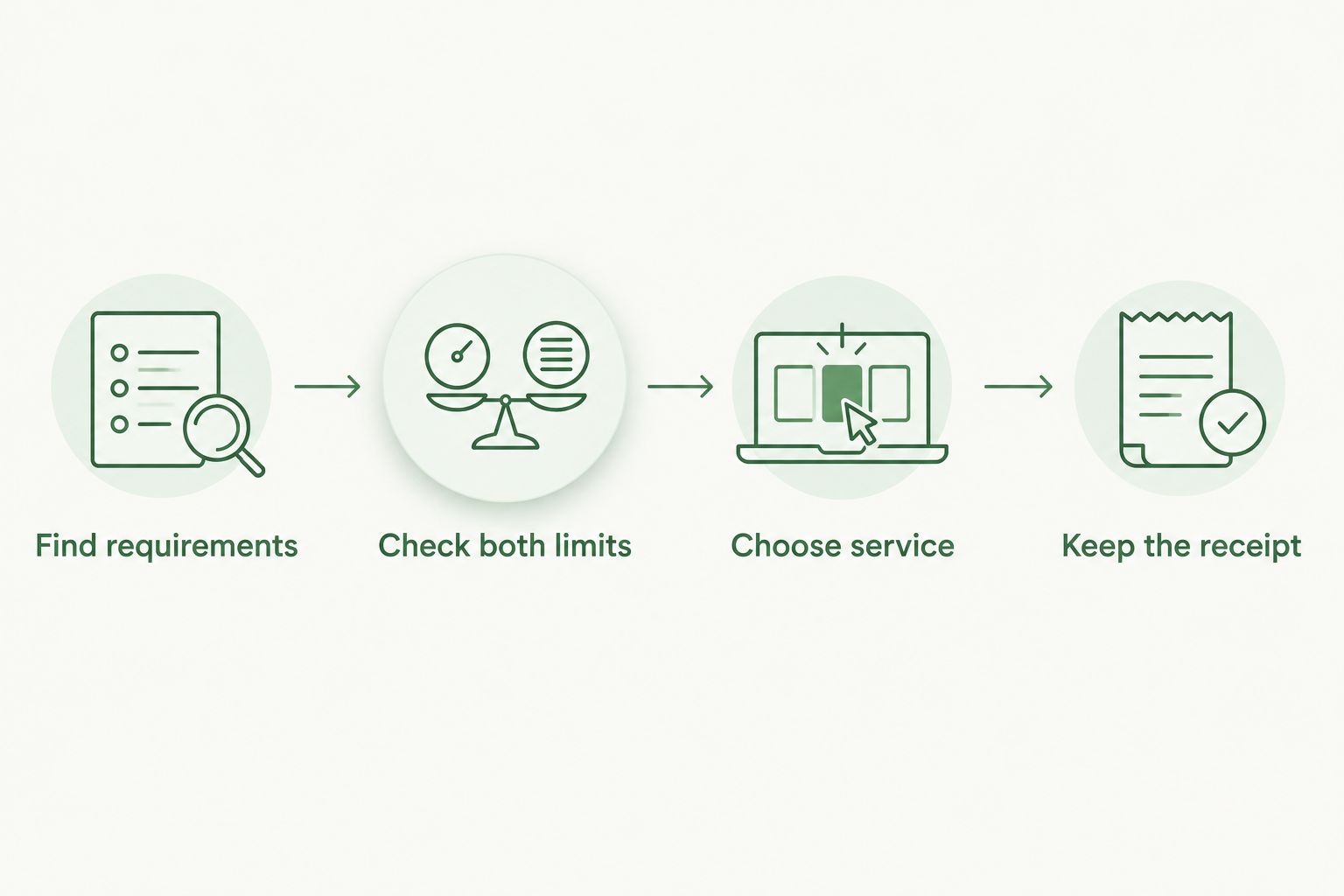
A simple maintenance sequence keeps the decision grounded in the vehicle’s needs. Find the requirements, check the limits, choose an appropriate service setting, and keep the record afterward. You don’t need a complicated tracking system to follow that sequence consistently.
Before a longer trip, review the service record early enough to address anything already due. Don’t assume the oil needs changing solely because you’re traveling, and don’t postpone scheduled maintenance solely because you have driven less than usual.
- Find requirements in the correct owner’s manual.
- Check both limits when time and mileage apply.
- Choose service that matches the work needed.
- Keep the receipt and set the next reminder.
Compare your service options
The best setting depends on the work your vehicle needs and how you prefer to handle it. This comparison separates routine oil service from repair work; it does not rank providers by an unverified speed or quality claim.
| Option | Best for | Main advantage | Key limitation |
|---|---|---|---|
| DIY oil change | Owners with suitable tools, experience, and a safe workspace | You handle the service and recordkeeping yourself | Requires physical work, correct procedures, and responsible used-oil disposal |
| Bolton Oil drive-up service | Retirees seeking an oil change while remaining in the vehicle | No appointment needed during business hours | Not a full-service repair business; no guaranteed wait or completion time |
| Repair facility offering oil changes | Owners who also need mechanical diagnosis or repairs | Can be an appropriate setting for concerns beyond routine oil service | Confirm the facility’s services and scheduling requirements before visiting |
If the car only needs scheduled oil service, choose a provider equipped for that task. If it also has an unresolved mechanical concern, choose the appropriate repair setting rather than expecting an oil change to answer the problem.
Mistakes worth avoiding
Counting miles but ignoring months
A car that stays parked can take a long time to reach a mileage reminder. Check the manufacturer’s calendar limit instead of assuming that a low odometer increase means service is not due.
Buying oil by the driver’s age
There is no oil specification determined by retirement status. Choose the oil your engine requires; neither the owner’s age nor the vehicle’s age alone establishes the correct viscosity or specification.
Confusing courtesy checks with repairs
A tire-pressure check is not tire repair, and a fluid check is not mechanical diagnosis. Know the provider’s service boundaries before arriving with a concern that needs repair equipment or diagnostic work.
Accepting a fixed service-time promise
Drive-up service means you don’t need an appointment; it does not mean there is never a line. Leave room in your plans rather than treating a quick-service description as a guaranteed completion time.
FAQ
Can someone help manage my oil-change records without coming to every visit?
Yes. A shared folder containing service receipts and the vehicle’s maintenance requirements can help you coordinate upkeep. Keep the latest service date and odometer reading easy to find.
Does switching to synthetic oil automatically let me extend the interval?
No. Follow the vehicle manufacturer’s maintenance instructions rather than extending the interval solely because you selected synthetic oil. The required oil specification and service schedule are separate decisions.
Does high mileage automatically mean I need a different oil?
No. Accumulated mileage alone does not replace the manufacturer’s oil requirements. If the vehicle has oil consumption or a leak, discuss that specific concern with an appropriate provider rather than guessing at a different viscosity.
Can I get an oil change if I prefer not to leave my vehicle?
Bolton Oil offers stay-in-your-vehicle oil changes at its three Lubbock locations during business hours. No appointment is needed, but wait and completion times are not guaranteed.
Should I reset the oil-life monitor if I only added oil?
Do not treat adding oil as a completed oil change. Follow your owner’s manual for checking oil level and resetting the monitor; a top-off does not replace scheduled oil and filter service.
Can I use the oil-change schedule from another car in my household?
Use the maintenance instructions for the specific vehicle and engine being serviced. Different vehicles can require different oils, schedules, and responses to special driving conditions.
Related guides
- Synthetic versus conventional oil for Lubbock drivers
- Oil changes for high-mileage vehicles
- Windshield wiper blade replacement
One last thing
Before your next 2026 oil change, write down two things: the last service date and the current odometer reading. Those details make the maintenance conversation more useful than saying the car isn’t driven much anymore.
When oil service is due, bring that information to Bolton Oil during business hours. You can stay in your vehicle while the crew handles the oil change and explains any related recommendations.